Industry Trends | October 19, 2026
For most of the past decade, bot management has centered on a relatively straightforward question: Is this interaction coming from a human or a bot?
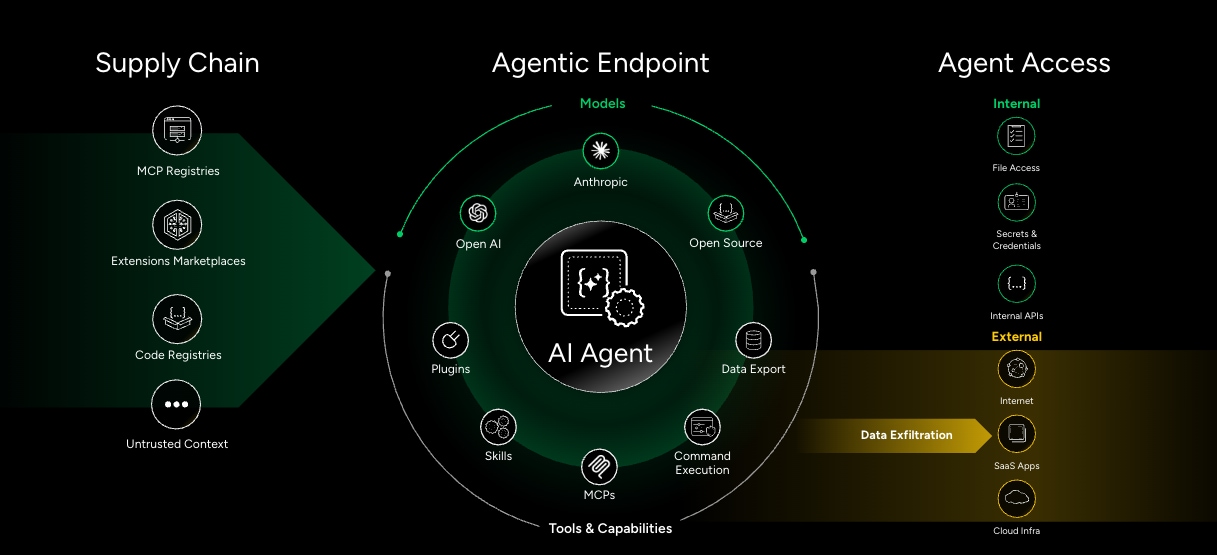
That question isn't going away, but it is no longer sufficient. Agentic AI is creating autonomous agents that can reason, plan, and act. These agents can navigate websites, interpret content, adapt to changes, and execute complex, multi-step workflows with little or no human intervention.
For security teams, that means the challenge is shifting from simply identifying and blocking unwanted automation to understanding its intent and deciding what to do about it.
The next era of bot management will require us to answer a different question: Can this interaction be trusted? This question is at the center of my session, “Trust in the age of AI agents,” part of F5’s on-demand Post-Mythos Security Summit.
“The question now isn't simply whether you're dealing with a bot. It's what that interaction is trying to accomplish, whether it can be trusted, and what you should do about it.”
The bigger change isn’t volume. It’s capacity.
Automated traffic continues to grow. But the more important change isn't simply how much automation organizations are seeing. It's what that automation can do.
Today's AI agents can behave remarkably like legitimate users. They can log in, navigate a site, add items to a cart, register for an account, or complete a transaction. At the same time, attackers can use increasingly capable automation to orchestrate campaigns that adapt across identities, devices, and sessions.
That erodes a distinction security teams have relied on for years. A legitimate shopping assistant may be automated traffic that a retailer wants to welcome. An automated system attempting credential stuffing, account takeover, scraping, or promotion abuse clearly isn't. And both may interact with an application in ways that, viewed one request at a time, appear legitimate.
A clean request can still lead to a bad outcome
This is where traditional approaches can fall short.
Specialized bot management and fraud prevention tools typically solve a specific problem, such as identifying malicious requests or flagging suspicious transactions. Because they operate within a narrower scope, they may not have sufficient visibility to identify coordinated activity that spans multiple devices, user sessions, accounts, and stages of the customer journey. Competitors protect traffic; F5 protects business workflows.
Consider a checkout workflow. A login can look legitimate. So can navigating a product page, adding an item to a cart, and submitting a transaction. But understanding the complete sequence, and the identities, devices, and behaviors associated with it, can reveal a very different picture.
An internal bots and automation analysis, for example, found that checkout experienced a 13.38% increase in automation on mobile platforms from December 2025 through May 2026. That illustrates why protecting individual requests isn't the same thing as protecting the business outcome those requests ultimately produce.
Security and fraud teams therefore need to understand more than whether something is automated. They need enough context to decide whether a particular interaction should be allowed, monitored, challenged, or blocked.
From detection to real-time decisioning
Bot detection remains critical. But even perfect bot identification wouldn't solve this problem by itself.
The next step is real-time decisioning based on identity, behavior, and intent. That requires understanding who or what is interacting with an application over time, maintaining behavioral context across active sessions, establishing persistent device identity, and connecting anomalous activity across accounts.
In other words, the solution isn't simply better point detection. It's better decisions.
That's an important evolution for bot management because automation itself is becoming part of normal digital business. As autonomous agents increasingly search, shop, book, and transact on behalf of people, organizations can't simply treat every automated interaction as something to stop. They need to distinguish trusted automation from malicious activity and respond appropriately, without introducing unnecessary friction for legitimate customers.
Making trust decisions in the autonomous era
During my session at theF5 Post-Mythos Security Summit, I discuss how F5 Distributed Cloud Bot Defense is evolving to address this environment, including agentic AI detection and device intelligence. I'll also explore how persistent device identity, behavioral context, and relationships across accounts can help security and fraud teams make real-time trust decisions, and how emerging approaches to agent identity can help organizations welcome legitimate AI-driven interactions while responding appropriately to abuse. And because AI agents act through APIs as much as through web pages, F5 Distributed Cloud Bot Defense works alongside F5 Distributed Cloud API Security on the F5 Application Delivery and Security Platform, so trust decisions follow every interaction, wherever it happens.
Bot detection solved an important problem when automated scripts were easier to distinguish from human activity. Agentic AI is changing that equation.
In the autonomous era, the winners won’t be the organizations that block the most bots, but rather the ones that know which interactions to trust, and act on those decisions in real time.
To learn more, be sure to check out my presentation at the F5 Post-Mythos Security Summit.
To understand the technology behind how F5 is addressing the threat of malicious use of agentic AI, read our technical article.