One of the most fun parts of studying a new language is learning unusual and surprising words. People around the world can have really different ways of describing their experiences and customs! Here are 7 interesting Spanish words that learners are bound to hear.
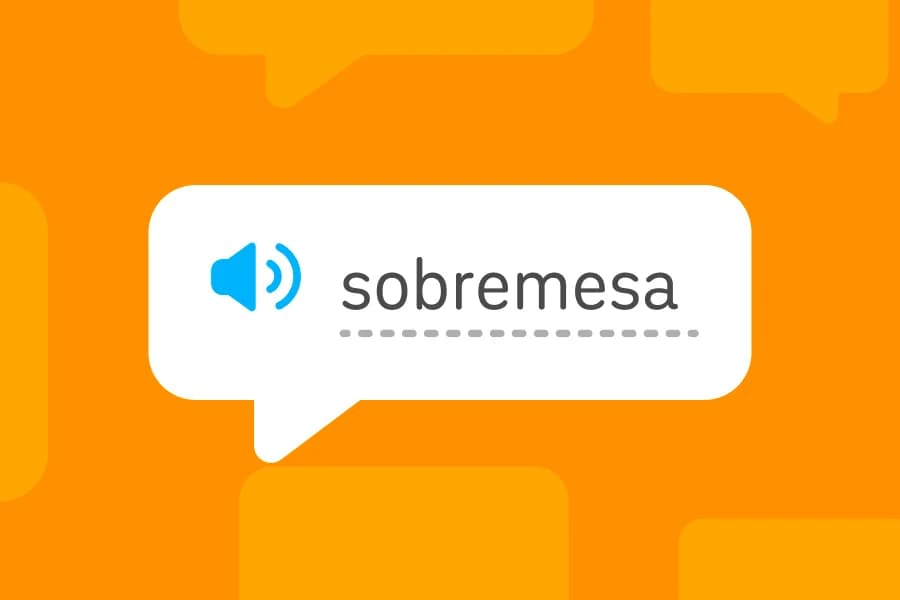
Sobremesa
There might be no word more Spanish than sobremesa. In Spanish-speaking cultures across the globe, meal time is sacred: It’s a time to connect and relax with friends and family, and it should not be rushed! That’s why spending a long time at the table—even after the food is gone—is so important that it gets its own word… sobremesa! Be prepared to hear sentences about lunch like Estuvimos de sobremesa hasta las 5 de la tarde (We were at sobremesa until 5 in the afternoon).
Irse de puente
If a holiday falls on a weekday, people may take un puente (literally a bridge), or extra time off between the day off and the weekend, so they can irse de puente and have an extra-long weekend! For example, you could say Nos vamos de puente a la playa (We’re going to the beach for this long weekend). You’ll see un puente as the noun, and there are a few different verbs used for the action of making it a long weekend: irse de puente, tener puente, estar de puente, hay puente.
Estadounidense
This word may not have a surprising meaning, but the reason for its meaning is important for learners! Estadounidense comes from Estados Unidos (United States) and means a person from the U.S. While English speakers often use Americans, especially in the U.S., the word americanos in Spanish means people from anywhere in the Americas: North America, South America, Central America, and the Caribbean. In fact, people in Spanish-speaking countries learn about there being 6 continents, with both North and South America forming one together, so it makes sense for americanos to refer to anyone from the Americas. Estadounidense specifies that you mean someone from the U.S.!
Estrenar
Estrenar is a verb used when you are using or doing something for the first time, like wearing a new shirt, or starting a new job at work. Its meaning is sort of similar to debut in English, but it’s used much more broadly and casually in Spanish. When you’re estrenando that great new item, you can also say ¡Voy de estreno! (I’m out here doing the estreno!), and when you first get promoted to manager, say ¡Hoy me estreno como gerente! (Today I’m estrenando as manager!) from the reflexive verb estrenarse.
Manía
In Spanish, manía can have many meanings, but they are all about intense feelings. El profesor me tiene manía means The teacher is out to get me, but in Tengo la manía de hacer mis lecciones, the word manía means something more like obsession (like I’m obsessed with doing my lessons). And if it’s your pal who is consumed with their Duolingo streak, you might say: ¡Qué manía!
Tocayo
If you share the same name as someone, you are their tocayo (masculine) or tocaya (feminine), and they are yours! That person could be your namesake (someone you were deliberately named after), or just someone you met who has the same name.
Tutear
Early on, Spanish learners find out that there are two levels of formality in the language when it comes to pronouns and verb conjugations. In most Spanish-speaking countries, tú is the informal version of you, which you use with family members, friends, and children, and usted is the formal way to say you that is used with people you want to show extra respect for, like older people, people you don’t know, and people in authority positions. If you’ve been using usted with someone and they want you to switch to tú, they’ll ask you to tutear: use the informal tú with them!