The Additive Opportunity Your Team Is Probably Ignoring
Somewhere in your product portfolio, there's a part that's too expensive to tool for the volume you need, a fixture your production team has been waiting weeks for, or a legacy component held hostage by a single supplier. The business case for additive manufacturing is already there — the challenge is recognizing it.
Here are five places to look.
Opportunity Signal 1:
Are your tooling costs disproportionate to the number of parts you actually need?
Dedicated tooling can be difficult to justify when volumes are low, demand is uncertain, or the design is still evolving.
Producing directly from digital design can support pilot builds, pre-series production and market introduction without an immediate tooling commitment—giving your team greater flexibility as requirements become clearer.
Consider this: Your team needs a small initial production run while the design or demand is still evolving. Additive manufacturing could allow you to produce those parts without committing to dedicated production tooling too early.
The Upside:
- Lower upfront tooling investment
- Faster access to pilot or pre-series parts
- Greater flexibility as demand develops
- Less risk of tooling a design that may change
Opportunity Signal 2:
Is the cost or lead time of another prototype preventing your team from testing a potentially better design?
Long prototype lead times and high iteration costs can limit how many design options your team evaluates.
Producing revised parts directly from updated digital files can support faster testing and earlier feedback helping your team make better-informed decisions before committing to final manufacturing.
Consider this: Your team is developing a surgical instrument handle, and clinicians request changes to the grip angle and button position. Additive manufacturing could enable several variations to be evaluated before the final geometry is selected.
The Upside:
- Faster clinician and stakeholder feedback
- More design alternatives evaluated
- Earlier identification of usability issues
- Less risk of carrying design problems into tooling
Opportunity Signal 3:
Which missing fixture, guide or inspection aid is currently slowing your production team?
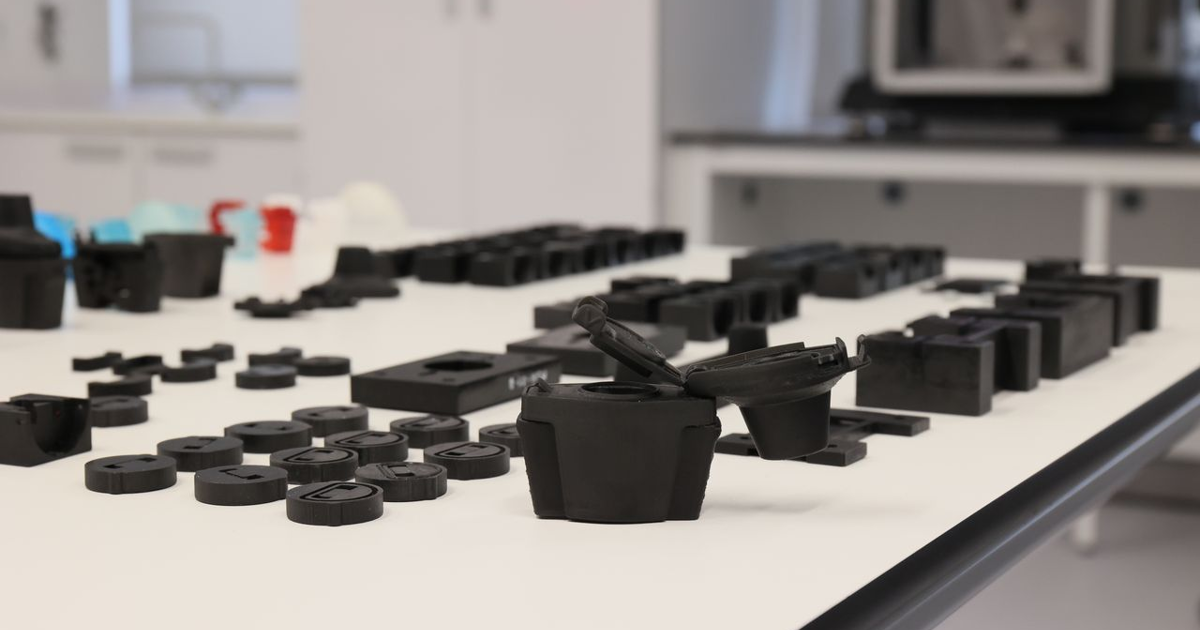
Custom fixtures, guides and inspection aids are often needed in small quantities and on short timelines. Waiting for conventionally manufactured tools can delay pilot lines and production changes.
Producing these tools additively can shorten procurement times and make future modifications easier—helping your team keep production moving as product requirements evolve.
Consider this: Your pilot line needs four custom fixtures to hold a handheld diagnostic device during assembly. Additive manufacturing could help the team begin production sooner and update the fixtures if the device design changes.
The Upside:
- Shorter tooling and fixture lead times
- Faster production-line setup
- Easier modifications after design changes
- Lighter, more ergonomic tools for operators
Opportunity Signal 4:
Could a difficult-to-manufacture assembly be redesigned as fewer parts — or even one?
Complex components may require multiple manufacturing operations, suppliers and assembly steps. Each additional part can add cost, inventory and potential points of failure.
Additive manufacturing can enable difficult geometries and, in suitable applications, consolidate several components into fewer parts—simplifying production and reducing assembly requirements.
Consider this: Look at an assembly in your product that relies on several individually manufactured components. Could some of those functions be combined into a single printed part?
The Upside:
- Fewer components to source and manage
- Reduced assembly time
- Greater design freedom
- A simpler bill of materials
Opportunity Signal 5:
Which unavailable or slow-to-source component would cause the greatest disruption to your customers?
Legacy components, minimum order quantities and dependence on a single supplier can make replacement parts difficult and expensive to obtain.
For suitable and qualified applications, digital production can provide parts when they are needed—reducing dependence on obsolete tooling and excess physical inventory.
Consider this: A cover for an installed medical system is no longer available from the original supplier. Qualified on-demand production could support replacement-part availability without rebuilding obsolete tooling or holding excess inventory.
The Upside:
- Less dependence on obsolete tooling
- Reduced inventory exposure
- Greater flexibility for low-demand spare parts
- Faster response to supply disruptions