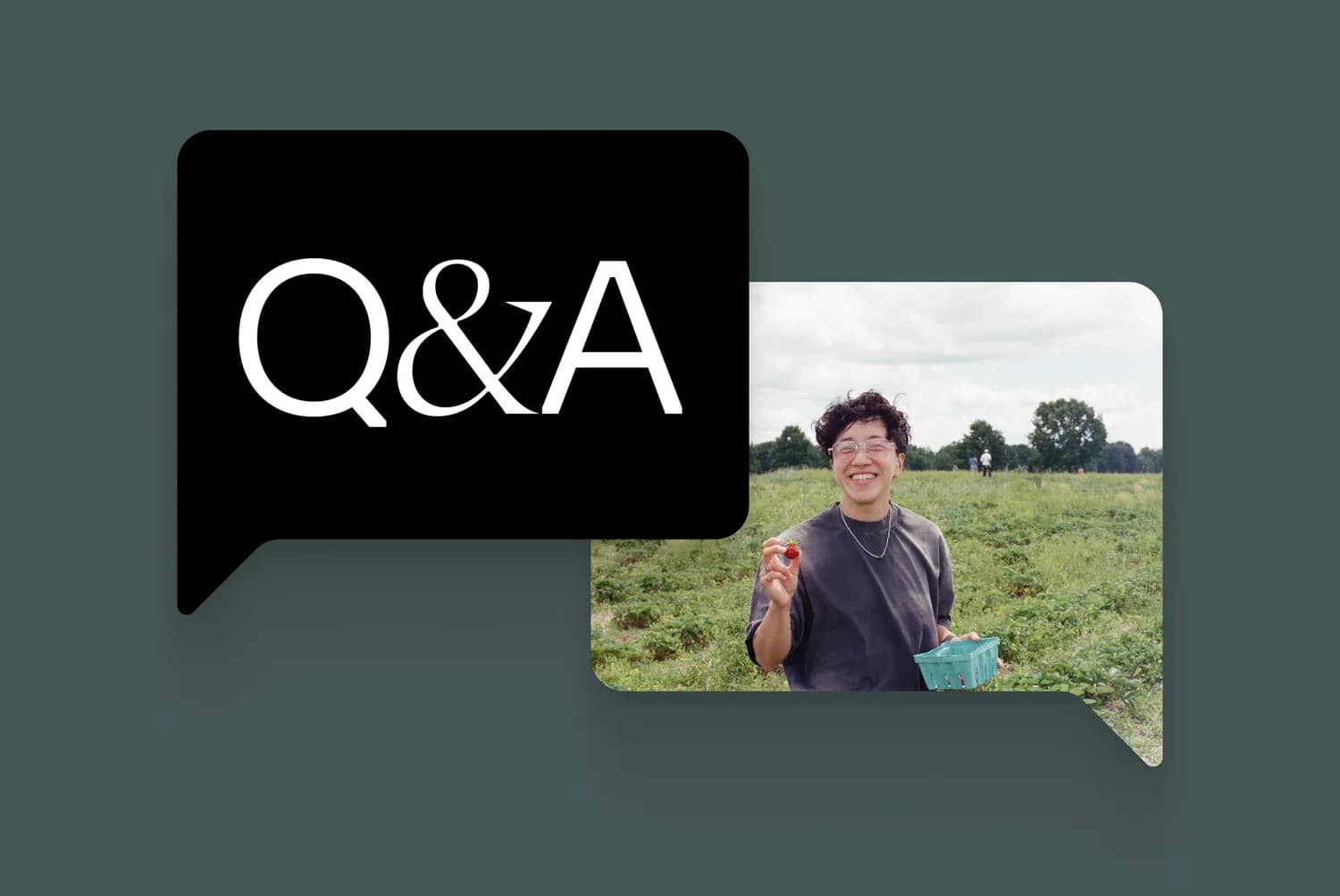
Design found August Tang early, years before they had a name for it. As a kid, they filled notebooks sketching skate brand logos, chasing the exact angles of the DC and Vans wordmarks. But between StumbleUpon binges, Club Penguin sessions, and hours spent customizing a Tumblr page, August was absorbing the visual language that would eventually define their career.
August is now a product designer at Squarespace, based in Brooklyn, New York. Formally trained in graphic design, their work prioritizes both visual cohesion and category-defining UX. Outside of Squarespace, they speak and write about inclusive product design.
We asked them 10 questions about the interfaces and internet communities that shaped them, including an operating system whose influence they still see everywhere and a tip for anyone who wants their website's content, not its features, to do the talking.
Growing up online and discovering design
What websites do you remember spending a lot of time on as a kid?
StumbleUpon, Tumblr, DeviantArt, Club Penguin, RuneScape, YouTube! I was such a nerdy kid. I loved games and art on the internet. My parents limited the time I was able to spend on the computer, so this list is really the extent of where I lingered—along with Gmail and MSN Messenger. When I would go over to friends’ houses, we would watch videos on YouTube together, memorizing the scripts and reenacting them in real life.
What got you interested in design?
When I was in grade school, I remember being obsessed with logo design. I would sketch all of my favorite skate brand logos in my notebooks, drawing them over and over again until I got all the angles and proportions correct. DC, Hurley, Es, Flip, Baker, Girl, Fallen, Vans. When I entered middle school, I lived on deviantart.com and dafont.com, both of which are somehow still alive. I spent my time thinking about colors, layout, storytelling, and fonts. I’ve been a designer since I was 13, I just didn’t realize it at the time.
What shaped their design philosophy
Thinking back on those websites, how have they influenced your own work?
I remember getting into Tumblr and seeing everyone customize their curated pages. Tumblr templates shaped my sense of good web design. It was where I discovered the possibilities with infinite scroll, masonry grids, smooth reveal animations, grid density and content density, mixtures of content types. It was an amazing source for design inspiration.
Is there an older website whose impact you still see in web design today?
It’s not a website, but an interface. The original Mac OS and early Windows OS are iconic. No matter how much web design and the internet change, the footprint of those original operating systems UI will live on forever in the way information is structured. I also love the resurgence of ‘90s interfaces on the web—recreating and resurrecting an old PC or Apple desktop with the little folders, pixelated type, and lo-fi image fidelity.
Building a well-designed website
Did you ever build a website for yourself or a friend back then?
As a kid, I never built websites, just admired them from the sidelines. The technical aspect of building one always confused me—the HTML, CSS, JavaScript, and other languages. Code felt scary to me. It wasn’t until college that I built my very first vanilla HTML/CSS/JavaScript website, which is my portfolio website, augustang.com. Since then, I’ve built websites for various friends who are artists or have small businesses, the most notable being samfresquez.com, stretchsquared.com, and mmbutton.com, which are all on Squarespace!
If I'm starting to build a website, what are some good tips to keep in mind?
Definitely start by thinking about the content of your site. A website is simply a container. Ideally, it helps the content shine and be the star. Sometimes, websites can have flashy features or bespoke interaction patterns, but that’s only helpful if it supports the message you’re trying to communicate. Keep it simple at first, and build on it over time.
Now, you’re a designer at Squarespace. Why is design so central to the company's approach to websites?
Although our founder and CEO is an engineer, I feel like what differentiates us is how we prioritize good design. Lots of companies overlap in functionality, but Squarespace specifically is built on a solid design foundation. We believe good design can be accessible and attainable for the everyday person.
What are some other websites that you think are well designed today?
Because I’m a product designer with a visual design background, I love a website that is both functional and beautiful. A few favorites are atlason.com, wwake.com, toptier.relats.com, lightshiprv.com, and butter.video. Sharp typography and usability are key. But interactivity, rich content, and smooth animations are what separate great websites from just good websites.
If I'm starting to build a website, what are some good tips to keep in mind?
Definitely start by thinking about the content of your site. A website is simply a container. Ideally, it helps the content shine and be the star. Sometimes, websites can have flashy features or bespoke interaction patterns, but that’s only helpful if it supports the message you’re trying to communicate. Keep it simple at first, and build on it over time.
On designing with AI and what's next
AI tools promise to make design accessible to more people. What role should AI play in the design process at Squarespace?
My process has inherently changed with AI tools. Instead of spending 90% of my time designing in Figma, I now spend 50% of my time in Figma, concepting and refining, and 50% of my time in building in code, prototyping and testing ideas.
These days, I can utilize my generalist coding knowledge to create higher fidelity prototypes of designs that are closer to production (or even production ready, depending on the code standard).
Right now, AI doesn’t quite have the taste and refinement to replace my design process, but it definitely unlocks quicker prototyping and clearer technical implementation. In college, I always joked that my job in 10 years would be something that doesn’t exist today, and here I am, living that reality. I’m curious to see what I’ll be doing in another 10 years.